


You don’t want to be driving in a car with brakes that fail or are starting to fail. The inability to stop is scary and can cause serious accidents and injuries. Learn the signs that your brakes need to be replaced before it gets to this point from your Toyota dealership near Philadelphia.
Check Your Brake Pads
The pads are what squeeze the rotor to make the car stop. Look in between your wheel spokes and locate the round, metal rotor. If you don’t have spokes you can see through, remove the tire to see the rotor. You’ll see the pads attached to calipers on the outside. If the pads are under one-quarter of an inch thick, you need to get them changed.
Vibrating
Pulsing and vibrations of the brake pedal when braking indicate a rotor is warped. The brake pads are unable to grip the rotor correctly. Warping happens after long periods of braking like driving down a steep mountain or towing a heavy load.
Squeaking and Grinding
Brake pads are designed so that when they are too worn down, the driver will be alerted by this noise. Replace the brakes right away. If you hear a grinding, you’ve let the pads run down way too far and are doing damage to the rotors. This is much more expensive than replacing the pads.
Pedal Sinking to the Floor
If the brake pedal falls all the way down to the floor or your brake response time is slowing, the brake system might have a leak. The leak could be in the hose or it is leaking fluid. If you see a puddle on the ground beneath where you park the car it could be a sign of a brake fluid leak.
We live in a fast paced, busy world where everybody needs to be somewhere five minutes ago. Sitting in traffic unable to move to your destination fast enough is frustrating. Perhaps you cut someone off to get ahead of them and then they shout obscenities and you reply with a rude gesture. Getting angry behind the wheel is road rage, and it can cause accidents, injuries, and above all, unnecessary stress. Your Pennsylvania Toyota dealership cares about its drivers and is offering advice on how to avoid road rage situations.
Don’t Cut People Off
A survey by AAA found this to be one of the most irritating behaviors to other drivers. Be certain that you have plenty of room before you merge in front of someone. Own up to it if you do cut someone off accidentally, and apologize with an appropriate gesture or wave.
Listen to Relaxing Music
If you find yourself getting upset, you may need to change the channel. Avoid loud aggressive music and opt for something more relaxing like jazz or easy listening music to help calm your mood. A comedy channel on satellite radio could do the trick too.
Avoid Eye Contact with an Aggressive Driver
If someone on the road is upsetting you or acting erratically, don’t look directly at them. Eye contact can be misinterpreted as a personal threat or challenge. Keep your eyes on the road and concentrate on getting to where you’re going safely.
Put Yourself in Their Shoes
Not every annoying of aggressive act on the road is a personal vendetta. Try to think of a reason why the driver is behaving that way before flipping out. That woman may be driving exactly the speed limit in front of you because she already has a speeding ticket. A person weaving in and out of lanes may be facing an emergency situation or heading to the hospital. Think of a time you may have behaved the exact same way, and remember no one is perfect before losing your cool.
Summer is a time for opening the pool, cleaning off the patio and tending to the garden. Many drivers don’t realize that their vehicle needs special attention this time of year too. Take these tips from Hatfield Toyota on how to prepare your car for summer, so that you don’t have any unexpected problems.
Look Over the Air Conditioning and Cooling Systems
Summer is the prime time for an engine overheat, so make sure all of the cooling fluids are at their proper levels and that the air conditioning systems are working correctly. Remove any debris such as leaves or dirt that built up over the winter to allow for proper air flow near the radiator. Check that the radiator cap is not damaged in any way too. If you’re planning a long road trip, have a professional mechanic check the vehicle out first.
Remove Snow Tires
If you live in an area with harsh winters, chances are you have snow tires. Summer is the time to change them to all-season. If you continue to use the winter tires, they risk damage from hot and dry roads. Keep on top of your tires’ pressure and make sure it’s at the correct level as well.
Protect the Exterior
Tend to your vehicle’s undercarriage to remove as much salt and winter buildup as possible. Use the undercarriage wash as an option at your car wash, or use a garden hose or sprinkler to loosen any junk on the bottom. Also wash the rest of the car and give it a coat of wax to protect the paint from the sun’s UV rays. Park in the shade as often as you can.
Toyota Dealer Suggests Teen Driving Curfews
Your Toyota dealer in the Trenton area suggests that parents enforce teen driving curfews. Our dealership doesn’t want to ruin anyone’s good time, but we think it’s important for teen 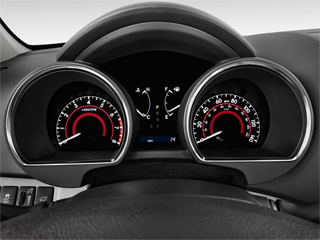 drivers to stay as safe as possible. Limiting when they get to drive gives parents more control.
Accidents Often Happen at Night
Teen drivers don’t have much experience driving at night. They need to learn, but it’s best for them to get experience slowly. Just because someone has a license doesn’t mean that he has mastered the craft of operating a motor vehicle.
Even experienced drivers can run into problems driving down dark roads. Things get even more confusing and complicated when it starts to rain.
Asking your kids to come home at a certain time will limit their exposure so they can learn in a safe environment.
Protecting Teens From Drunk Drivers
Cops don’t arrest many drunk drivers during the day. That usually happens at night and in the early morning. By making your kids come home at a decent hour, you can protect them from drunk drivers who can’t control their vehicles.
Give Your Kids Alternatives
A curfew can work well for most teens. But you have to make sure your teen driver knows that he can trust you. If a situation arises that’s beyond his control, have some understanding. Don’t immediately hand out a punishment.
Also, make sure your teen knows that he should never drive under the influence. If that means getting a ride from mom or dad, or crashing at someone’s house, so be it. You can have a conversation about the consequences after you know he’s safe.
Hatfield Toyota wants to make sure that you stay safe on the road, even when you have an accident or mechanical problems. Carrying a roadside emergency kit can keep you safer and help you get out of jams. But first, you have to know what items to put in your emergency kit.
Always Have a Working Flashlight
If you get stranded at night, you have to have a working flashlight. Without one, you won’t be able to do anything except wait for the dawn. Check the batteries every few months to make sure they still work.
Include Road Flares or Caution Signs
Oncoming traffic might not see your car on the side of the road. That creates a dangerous situation. As long as you have road flares or reflective caution signs, drivers will see you.
A Pair of Gloves
You might need to do a little work under the hood to get your car started. If you’ve been driving for a while, then your engine will be hot! A thick pair of gloves will offer some protection as you look for the problem.
A Cell Phone
You may need to call for help. Keep an emergency cell phone in your kit so you can call from anywhere. You don’t have to pay monthly fees when you get a pay-as-you-go phone. Instead, you just load minutes on the phone and use it when needed.
A Jug of Water
If your car runs out of coolant, a jug of water could get you to the nearest gas station. It’s not ideal, but it’s a quick fix to get out of a bad situation.
Your Toyota dealer in the Trenton area knows that you have plenty of options when you want to get your car detailed. Instead of choosing a detailer at random, follow this advice to find 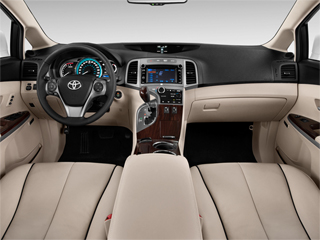 one that can get the job done well at an affordable price.
Tip #1: Ask for Recommendations
You’re hardly the first person in town to use a car detailer. Your friends, family, and colleagues have problem tried a few, so ask them to give you recommendations. Pay attention to the negative comments as well as the positive ones. It’s important to avoid unreliable detailers.
Tip #2: Use the Internet to Research Detailers
The Internet is a great way to read reviews written by people you don’t know. That means a broader range of opinions. Remember, though, that some people right inflammatory reviews. Try to get a consensus. Don’t choose or avoid a detailer because of one or two reviews.
Tip #3: Talk to the Detailer
Either call or visit the detailer so you can get specific information. Find out what the company does; what detailing packages they offer; and how much they charge. You can also get a good sense of customer service by talking to an employee or manager. If you get honest, straight-forward answers, that’s a good sign. If they barely have time for you, then you might want to choose someone else.
Tip #4: Give it a Try
At this point, you’ll probably have several detailers that you think will do a good job. Choose one and let them have a shot at detailing your car. If you like the results, then keep using them. If you’re not happy, move on to someone else next time.
A Toyota Dealer Reviews the 2013 Corolla
A Toyota dealer near Philadelphia wants to make sure that interested buyers consider the 2013 Corolla. This affordable car has several options that could make it a great option for you.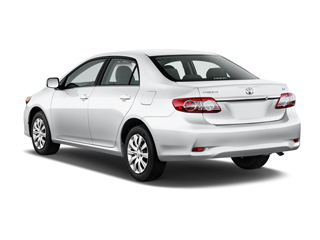 Schedule a test drive to experience what the 2013 Toyota Corolla can offer.
Quick Facts About the 2013 Toyota Corolla
- Comes in five trim levels
- All models have a 1.8-liter four-cylinder engine
- Side/curtain airbags are standard
- Stability and traction control are standard
- Special Edition models come with navigation systems
A Look Under the 2013 Corolla’s Hood
The 2013 Corolla has a 1.8-liter four-cylinder that will give you 128 lb-ft of torque and 132 horsepower. That might not sound like a lot of power, but most drivers will find it suitable for their needs. The Corolla can accelerate from zero to 60 in 10.1 seconds. That’s obviously not a fast time, but that won’t matter to buyers looking for a good deal on a reliable car.
With an automatic transmission, the Corolla gets 26 mpg driving in the city and 34 on the highway. With a manual, it gets 27 in the city. The mpg remains the same on the highway regardless of which transmission you choose.
Inside the 2013 Corolla
Inside the 2013 Toyota Corolla, you’ll find plush seats that feel as soft as La-Z Boy chairs. It also has a spacious back that passengers will appreciate.
When it comes to the trunk, you get an average 12.3 cubic feet. That’s enough for most people. What’s impressive is the trunk’s wide opening, which makes it easy to remove objects with struggling.
Your Pennsylvania Toyota dealership believes that the 2013 Matrix is a great car for the right kind of driver. Read this review to help you decide whether you want to schedule a test 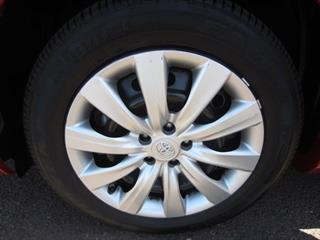 drive. If it matches your sense of style, then you might want to drive away in a new Matrix today.
Quick Facts About the 2013 Toyota Matrix
- Comes in two trim levels
- The base level has a 1.8-liter four-cylinder
- The S model has a 2.4-liter four-cylinder
- Manual and automatic transmissions available
- Bluetooth, iPod input, and satellite radio all come standard
- Safety features include stability control and traction control
A Look Under the Hood
The base L model comes with a 1.8-liter four-cylinder engine. It will give you 132 hp and 128 lb-ft of torque. That’s not a ton of power, although it works well in this lightweight hatchback. The real advantage is that you will get 32 mpg on the highway and 26 in the city. That means stopping for gas less often, which means you save money.
The S model has a 2.4-liter four-cylinder that offers a little more power. It will give you 158 horsepower and 162 pound-feet of torque. If you buy the Matrix S, you get to choose between all-wheel-drive and front-drive models. The all-wheel options gives you 29 mpg on the highway and 21 mpg in the city. The front-drive model with a four-speed automatic gives you 28 mpg highway and 21 city. With a five-speed manual gives you 29 mpg on the highway. The city mpg is the same.
Hatfield Toyota wants to make sure that buyers consider test driving the 2013 Camry. This car has a lot to offer. Whether you’re single or you have a family, it’s one of the best cars that Honda has to offer. Plus, it comes at an affordable price.
Quick Facts About the 2013 Toyota Camry
- Comes in four trim levels
- Two engines (a four-cylinder and V6) are available
- Comes standard with Bluetooth and iPod input
- Side/curtain airbags are standard
- comes with traction control and stability control
A Look Under the 2013 Camry’s Hood
Camrys that come with the 2.5-liter four-cylinder engine can give you 178 hp and 170 lb-ft of torque. That’s more than enough for this light car. It can jump from zero to 60 in just 8.4 seconds. The smaller engine also helps you save gas with 35 mpg highway and 25 in the city.
If you want more power, then you obviously have to go with the optional 3.5-liter V6. It will give you 268 horsepower and 248 pound-feet of torque. What’s the advantage of that? Well, you can go from zero to 60 mph in just 6.6 seconds. That’s pretty impressive. The extra power means you burn more gas, though. Expect 31 mpg driving on the highway and 21 mpg when driving in the city.
Safety Features of the 2013 Toyota Camry
The government gives the 2013 Toyota Camry five out of five stars in overall frontal protection and overall side protection. That’s good for a family vehicle. If you want to feel safe, the 2013 Camry obviously has a lot to offer.
Hatfield Toyota Explains How to Find Cheap Gas
Hatfield Toyota knows that expensive gas has hurt the budgets of many people. If you want to lower your fuel expenses, try using these techniques. They could help you buy cheaper gas that will keep more money in your wallet.
Tip #1: Know Which Stations Have the Best Prices Near You
You don’t need technology to tell you which station in your neighborhood has the best price on gas. You see prices posted all over town. Some of them shock you because they’re outrageously high. Others shock you because they’re so cheap.
No which ones to avoid so you don’t line the pockets of companies that want to rip you off.
Tip #2: Use GasBuddy
GasBuddy is a smartphone app that helps drivers find the cheapest prices in the United States and Canada. Plus, it’s free to download to your phone.
GasBuddy relies on its users to report gas prices. That’s how it gathers so much useful information. When you submit prices near you, you get entered into a weekly giveaway that could give you a $250 gift card.
Tip #3: Use SmartFuel
GasBuddy is great, but there are problems with relying on people to report prices. Hey, people make mistakes. SmartFuel taps into gas price databases to offer more accurate prices.
SmartFuel, however, isn’t free after the first month. It will cost you $2.99 per month, so you have to decide whether it actually helps you save that much before you buy it. Otherwise, you’re just transferring gas money to app money.
Connect with us
