


Toyota DealerExplains Your Car’s Essential Fluids
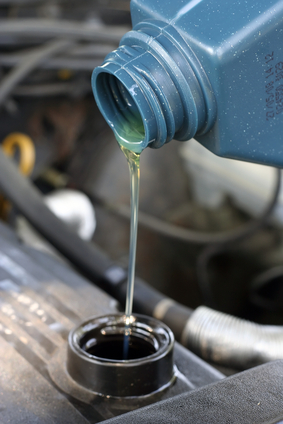 If we think long and hard, we might be able to reach back to Driver’s Ed. class and remember all the different fluids that are so important to your car. What’s more likely, though, is that we take it for granted that cars work without knowing why. Well your Toyota dealer in the Trenton Area refresh your memory about the basic fluids.
Oil
Far and away the most important fluid in your car, many of us forget to even check our oil. Many newer vehicles have sensors that will indicate when the oil needs to be changed, but if the oil isn’t changed regularly it can cause damage to the cylinders and decrease efficiency.
Coolant
Possibly the most overlooked fluid in the engine, coolant keeps your engine from freezing up in the cold and overheating in the hot. Keeping your coolant at the right ratio for the weather is incredibly important to normal operation of your car.
Brake Fluid
Definitely important, brake fluid is usually set by never being exposed to air. Brake fluid is what allows for you to press on the brake pedal and have something happen. Using hydraulic power, the fluid allows for force to be applied and your safety ensured.
Transmission Fluid
Another fluid that never sees the light of day, transmission fluid acts as a lubricant and coolant to keep gears and shifting from jamming or overheating. It can become a serious problem if debris is found in the transmission fluid.
Power Steering Fluid
Once upon a time, cars used a very different system for steering that required drivers to turn the wheel several times just to make a quarter turn. With power steering and steering fluid, hydraulic power makes it much easier and responsive when turning the wheel this way or that.
Toyota Dealer Has Three Rough-Ready Pickups for You
 If you’re in the market for a pickup truck, you know what it is you’re looking for. You’re looking for something that can perform and see you through the job. You’re looking for something that can fit your whole crew or your whole family. You’re looking for an MVP for your team. Your Toyota dealer near Philadelphia has three pre-owned pickups for you.
2012 Toyota Tacoma
The Tacoma starts with a 4-liter V6 that will give you 236 horsepower and 266 pounds of torque. With its four-wheel drive, it can handle over 1,300 pounds in payload and tow 6,500 pounds. The Tacoma features anti-lock, ventilated disc brakes, intelligent front airbags, and a six-speaker audio system with AM/FM/CD/MP3 playback and satellite radio readiness.
2006 GMC Sierra 1500
A massive 4.8-liter V8 is at the heart of the Sierra, cranking out 285 horsepower and 295 pounds of torque. An automatic transmission allows for nearly 2,000 pounds in payload and 6,700 in towing capacity. Cruise control and power windows are only some of the amenities in this workhorse. Add a six-speaker audio system that’s RDS ready to finish off the package.
2005 Ford F-150
Another crew cab, the F-150 sports a 4.6-liter V8 engine with multi-point fuel injection to generate 231 horsepower and 293 pounds of torque. That means your 4×4 drivetrain can take on over 1,300 pounds in payload and over 6,000 pounds in towing capacity. Four-wheel anti-lock and ventilated brakes keep you safe and the cruise control, air conditioning, and audio system keep you comfortable.
You may have heard the interesting fact that there’s more computer power in your smartphone than on the Apollo mission to the moon. Did you also know that the same can be said about your 2015 vehicle? Today’s vehicles are very complicated, so your Pennsylvania Area Toyota dealer wants to simplify it by explaining modern car suspensions.
Independent Versus Dependent
The real difference between dependent and independent suspension is how the wheels are allowed to move. In the old days, most cars were made with straight axles across the length of the car. That would mean that if one wheel was going over a bump, the opposite wheel would be affected. Independent suspensions, by far the most common today, allows all the wheels to move independently of one another.
Struts
The most widely used struts in most passenger vehicles are called MacPherson struts. The MacPherson strut combines a spring and a shock absorber in a kind of column that connects to the wheel. When you turn your steering wheel, it is the strut that causes the wheel to turn and absorbs impact from bumps.
Springs
Springs are used with what’s called a double-wishbone structure. Two A-frame pieces of metal are connected in the middle by a large coil spring and meet at their apex where the wheel is. As a wheel goes over a bump, the spring compresses and absorbs the impact.
Multi-Link
A more recent version of the double-wishbone design, the big difference is that the wishbones are not single pieces of metal, but rather multiple pieces joined together. There is still a spring between the upper and lower set, but the pieces themselves are able to turn with the wheel, making it more adaptable to road conditions.
If you’ve lived in Pennsylvania for any time at all, you know that our winters are unpredictable to say the least. We need to slog through all kinds of conditions and weather no matter what. That’s why it helps to be prepared for anything. It’s also why your Hatfield Area Toyota dealer is featuring the 2015 4Runner SR5 Premium with four-wheel drive.
A Powerful Engine
The 4Runner sports a 4-liter V6 with variable valve timing so that you can get 270 horsepower and 278 pounds of torque at the same time as an EPA-estimated 21 miles per gallon on the highway. The 4WD is still an ultra-low emissions vehicle with a five-speed automatic transmission with manual mode for added control.
A Functional Body
The 4Runner seats five comfortably and seven with the available third seating row. It can give you nearly 90 cubic feet in cargo room and is able to tow as much as 4,700 pounds.
A Smooth Ride
In addition to the smoothness provided by the coil spring suspension, the 4Runner also comes with an eight-speaker audio system with AM/FM/CD/MP3 playback, SiriusXM readiness, USB and auxiliary jacks for multiple devices, and Bluetooth streaming and handsfree calling, all integrated through a six-inch color touchscreen.
A Safe Place
Toyota is committed to safety above all. That’s why the 4Runner comes with electronic traction and stability control, anti-lock brakes with brake assist and brake force management, and an advanced series of airbags throughout the cabin for total protection.
Toyota SUVs for Towing at Toyota Dealer
You do not need a pickup truck to haul a trailer or your winter toys. Toyota has many SUVs that are family-ready and capable of pulling a trailer behind as well. Explore the Toyota SUV options for towing at Toyota dealer in the Trenton area.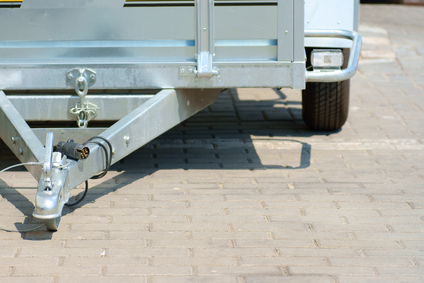
2014 Toyota Sequoia Limited 4WD
The MSRP for the exquisite 2014 Toyota Sequoia Limited 4WD is a little more than $60,275. The well-appointed SUV is armed with a powerful 5.7-liter V8 that glorifies 381 hp at 5600 RPM, 401 lb.-ft. of torque at 3600 RPM and 13/17 mpg. KBB ranked the SUV #2 in its class for horsepower and awarded the Sequoia a 2014 Best Resale Value Award. The SUV has a hitch receiver and wiring harness with a 4/7 pin connector. The max towing capacity is 7100 lbs. and the ground clearance is 10.0 inches. Every trip will be comfortable and entertaining with heated leather seats, seating for eight passengers, Bluetooth, a premium audio sound system, satellite radio, and a navigation system.
2014 and 2015 Toyota 4Runner
The 2014 Toyota 4Runner is the recipient of a KBB 2014 Best Resale Value Award. Both the 2014 and 2015 Toyota 4Runner SUVs have the 4.0-liter V6 engine that produces 270 hp at 5600 RPM and 278 lb.-ft. of torque. The 4WD Toyota 4Runner averages 17/21 mpg. A 4/7 pin connector is installed on the Toyota 4Runner to accommodate a 4700-lbs. towing capacity. Driver and passenger amenities include a sun/moon roof, heated mirrors, off-road tires, heated seats, Bluetooth, premium sound system, HD Radio, a CD player, rear parking devices, a backup camera, and Toyota’s Star Safety System™.
2015 Toyota Land Cruiser 4WD
If you want to spend the big bucks for the big dog, the Toyota Land Cruiser will blow your mind. The SUV offers 381 hp from the 5.7-liter V8, a 13/18 mpg fuel economy rating, 401 lb.-ft. of torque, and an 8200-lb. towing capacity. Installed conveniences in the 4-wheel drive SUV include a locking/limited-slip differential, backup camera, HD radio, satellite radio, navigation system, leather interior, front memory seating, heated front and rear seats, telematics, security system, 14 JBL speakers, adaptive cruise control, and a color touchscreen display.
The Service Team at Pennsylvania Toyota Dealership Wonders about Your Sway Bar Bushings
The sway bar is an important part of your vehicle’s suspension system. Sway bars are often referred to as stabilizer bars, anti-roll bars and anti-sway bars. Whatever you call the part, it serves the same purpose: prevent the car from rolling when going around a corner. Picture this for a moment: when you take a corner quickly, the force of the turn shifts your body to the outside. The same thing happens to your vehicle; this is referred to as body roll. With that in mind, it is important to identify potential sway bar issues, and the bushings are often neglected areas of concern. The service team at Pennsylvania Toyota dealership wonders about the health of your sway bar bushings.
What are Sway Bar Bushings?
The sway bar connects two wheels together: rear to rear, and front to front. The right amount of stabilizer bar will effectively keep both the wheels on the ground in a sharp turn. Too much stabilizer bar will result in a loss of independence among the suspension components, and too little or no sway bar at all will result in a loss of control and significant body roll issues. The right setting provides maximum control without compromising the independence of the tires. Where do the bushings come in to play? Sway bar bushings attach the sway bar to the frame of a car in a way that permits rotation.
Are Your Sway Bar Bushings Bad?
Because there are no required service recommendations for the sway bar bushings, you will not usually catch a problem before it occurs. If your sway bar bushings are bad, they will provide you with a few clues: clunking sound when one wheel goes over a bump, constant rattling of sway bar link, decreased handling, and a thumping sound when taking a turn too sharply or going over a bump.
The 2015 Toyota lineup is desired by many consumers because of the company’s consistent record for quality, affordability, style and safety. When the IIHS conducted its 2014 crash tests, the 2015 Toyota Camry was one of only a handful of cars to receive a safety award, so far. Toyota dealer in the Trenton area has the 2015 Toyota Camry, a 2014 IIHS Top Safety Pick+.
About the 2015 Toyota Camry
How do you make the most popular sedan in the American car market even better? Toyota has a few ideas: give it a facelift; update the chassis; improve the interior; offer a new XSE trim level; and offer wireless charging for mobile devices. Whatever you need and desire in a sedan are offered in the Toyota Camry, and you do not have to spend a ton of money to get a ton of benefits.
Current available models are the Camry SE and Camry LE. The price range for the Toyota Camry models currently on the lot is between $24,020 and $24,890. The 4-cylinder Toyota Camry models average 148 hp at 6000 RPM and 25/35 mpg. If you decide to upgrade to the V6 model, it will average 268 hp at 6200 RPM and 21/31 mpg. All of the Toyota Camry trim levels are front-wheel drive vehicles, 6-speed automatic transmissions, and Toyota Direct Ignition.
Standard features in the Toyota Camry include the Entune™ audio system with iPod® connectivity, Bluetooth®, AM/FM radio, a CD player, auxiliary audio jack and a touchscreen display. Toyota also equipped the sedan with a backup camera, a multi-function remote key, woodgrain-style trim, power locks, dual sun visors with extensions, and cup holders in the front and rear of the vehicle.
The 2015 Toyota Camry earned the exclusive 2014 IIHS Top Safety Pick+ Award. Toyota equipped the sedan with the comprehensive Star Safety System, which consists of brake assist, traction and stability control, ABS, and electronic brakeforce distribution.
Replacing the Headlight Bulb in Your Hatfield Toyota
Replacing a headlight in older vehicle was much easier back in the day. It used to be that you popped out the light, replaced it with a new one, and voilà, you were finished. Now, replacing a headlight can be a difficult task. Hatfield Toyota has tips to help you replace your car’s headlight. 
Tools You Will Need
When you replace the bulb, you might as well go ahead and replace both at the same time. Before you get started, gather the tools and parts you will need for the job:
- Replacement bulbs (type and size can be located in your owner’s manual)
- Service manual for your car
- Tissue or rubber gloves (never touch the glass part of the bulb)
How to Replace a Headlight Bulb
It is very likely that the headlight bulb will be squished in between many other parts, which means you will have to become quite the hand contortionist to replace the bulb.
- Pop the hood open on the vehicle.
- Squeeze your hand down behind the headlight assembly.
- Depending on your vehicle, the wiring may be held in place with a plastic catch, a metal clip, or a screw cap. If your car has a plastic catch, push down on the lever with your thumb while pulling on the plug. If your assembly has a metal clip, gently pull the back of the bulb out of the assembly. If you cars lights are held in with a screw cap, unscrew it by turning the cap counter-clockwise.
- When the wires are moved, tug on the base of the bulb to remove it from the housing.
- If you aren’t wearing rubber gloves, use a clean tissue to pop the new bulb in to place.
- Attach the wiring and you are good to go. Turn on the lights to ensure it is working. You should also face the car toward a wall or garage door to make sure the lights are level.
Pre-owned Hybrids at Pennsylvania Toyota Dealership
You can get into a hybrid vehicle without spending loads of dough. Purchasing a pre-owned hybrid is an excellent way to save cash on the sticker price and at the gas pump, all while you are doing your part to reduce your carbon footprint. If you have been thinking of going green on a budget, consider a pre-owned hybrid at Pennsylvania Toyota dealership.

2007 Toyota Camry Hybrid
The 2007 Toyota Camry Hybrid is priced below $11K, and it is a CARFAX 1-owner sedan. Under the hood is a 2.4-liter inline-4 hybrid engine with a double overhead cam and variable valve timing, a front-wheel drive drivetrain, and a CVT automatic. The horsepower rating is 187 at 6000 RPM with a 33/34 mpg rating. According to the EPA, the estimated annual fuel cost is $1,350, which can save consumers over $2700 in five years compared to the cost of the average new car. Added driver amenities include keyless start, adjustable seats, multi-zone A/C, universal garage door opener, automatic headlights, Bluetooth, a premium sound system, and a comprehensive safety system that earned the sedan 5-star NHTSA safety ratings.
2006 Toyota Highlander 4WD
If it is a hybrid SUV you desire, the dealership has one of those too. The 2006 Toyota Highlander Hybrid LTD is priced below $10K. The SUV earned a 2006 JD Power in initial quality, and KBB readers gave the Highlander a 9.2 out of 10 rating. Toyota equipped the Toyota Highlander with a 3.3-liter hybrid V6 that produces 268 hp at 5600 RPM and averages 27/25 mpg. According to the EPA, the estimated annual fuel cost is $1750. Creature comforts in the 2006 Toyota Highlander include third-row seating, a premium sound system with CD player, roof rack, sunroof, leather seats, heated front seats and a 4-wheel drive drivetrain.
If you notice leaks or wind noise, it may be time to replace the weather stripping, and your dealership can help. Hatfield Toyota offers advice about replacing your vehicle’s weather stripping.
What is Weather Stripping?
Weather stripping is a rubber insulator that is found all over your vehicle. When the stripping goes bad, you will notice leaks, rattling and drafts. If you are trying to identify specifically where the stripping is bad, you will need to inspect the entire vehicle. Look for puddled water, wet spots and air noises.
Types of Weather Stripping
You will find weather stripping sold two different ways, just as your car’s other parts are sold: manufacturer and aftermarket. The type and age of car will determine what types of seals are available:
- Door seal
- Vertical seal
- Roof-rail seal
- Window sweeps
- Trunk seal
- Windshield seal
- U-jamb seal
- Convertible seals
- A-pillar seals
- Header seal (on the windshield; it is not an exhaust seal)
How to Replace the Weather Stripping
When you identify the damage, determine what type of seal is sold for your vehicle. Before you start tearing the car apart, make sure the new parts match the existing ones.
- Remove screws and clips that hold the stripping in (set them aside and mark them)
- Strip away the old seal and use an adhesive remover to get rid of the remaining residue.
- Wash the area with a mild cleanser and dry it completely with a towel.
- Apply the new adhesive before gently setting the weather stripping in place. Make sure it is properly aligned before securing it in place.
- Press the weather stripping in place before replacing the screws and clips.
Connect with us
